By John Kyle, Special to the Message
NASHVILLE, Tenn. (LBM) – “Empty” – it’s not one of our favorite terms. It’s not one of our preferred greetings. When someone asks you, “How are you doing?” you probably don’t respond by saying. “Empty, thanks for asking!”
Yet emptiness is a common experience in our culture.
Many popular songs through the years have focused on the emptiness of life — “Running on Empty,” “Look at All the Lonely (empty) People,” “Empty Spaces,” and “Empty Garden,” to name a few. Largely, the focus on “empty” in such songs includes themes of loss, longing, and emotional voids.
For that matter, most thoughts or images relating to “empty” generally are negative: empty gas tank, empty bank account, and broken relationships that lead to empty homes and hearts, to name a few.
Empty, exhausted, spent, broke, lonely – whatever term you choose, “empty” carries pessimistic tones. “Empty” is inconvenient. “Empty” leads to hopelessness. “Empty” offers no alternatives.
No one wants to experience “empty.” Yet “empty” is where Easter was born.
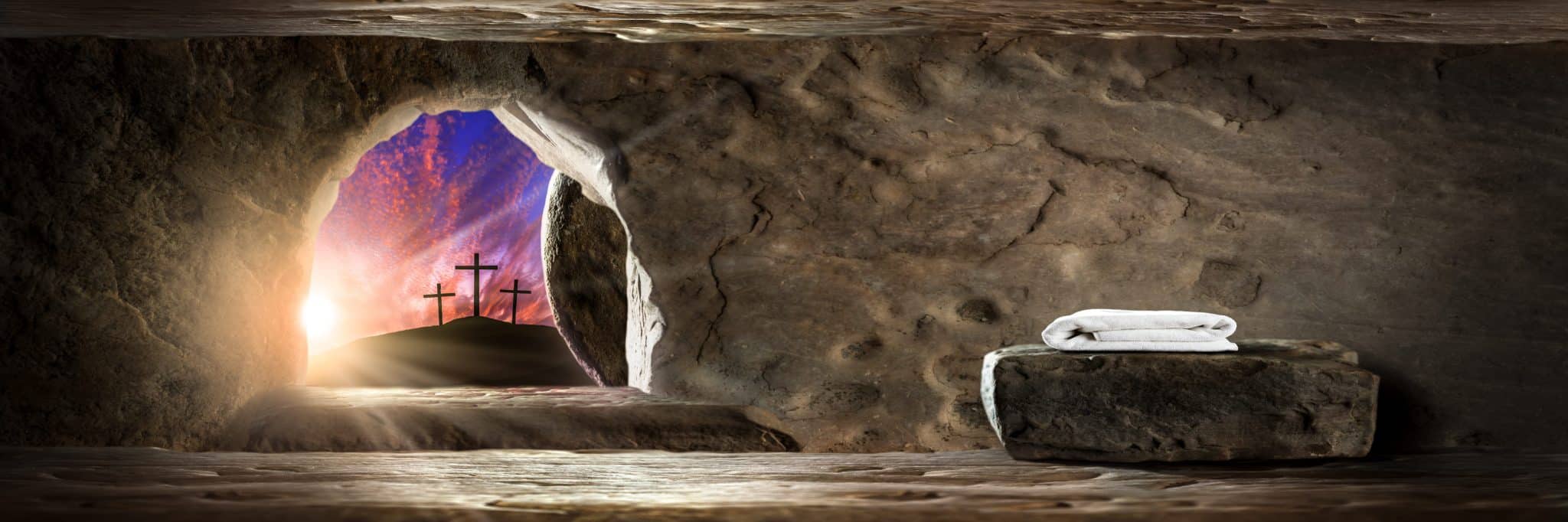
More than 2,000 years ago, two empty (discouraged) women went early one morning to visit the tomb where they saw their teacher buried. Empty and broken-hearted, they hoped to pay their respects to someone who had transformed their lives. Several days prior, they were full of hope and expectation when their teacher rode into Jerusalem on the back of a donkey. The crowds cheered and hope reigned supreme. Several days later, their teacher went through a mock trial, was beaten until he was unrecognizable, and was nailed to a Roman cross. How could their lives be so full and instantly so empty?
When they arrived at the tomb, they were surprised to find it – empty! They were greeted by an angel who asked: “Why are you looking for the living among the dead? … He is not here, but he has risen! Remember how he spoke to you when he was still in Galilee, saying, ‘It is necessary that the Son of Man be betrayed into the hands of sinful men, be crucified, and rise on the third day’? And they remembered his words” (Luke 24:5-8, NIV).
For once, “empty” was good news!
But why were they surprised that the tomb was empty? Jesus told them on multiple occasions what was going to happen – what had to happen.
This brings to mind a question: Why do we look for Jesus in places where He told us He wouldn’t be? Even the angel reinforced this question when he asked the women, “Why are you looking for the living among the dead? … Remember how he spoke to you … .”
Could one of the reasons we often find ourselves empty is we don’t pay attention to what Jesus tells us?
In Psalm 81 God reinforced this when He said, “But my people did not listen to my voice; Israel did not obey me. So, I gave them over to their stubborn hearts to follow their own plans. If only my people would listen to me …” (vv. 11-13).
Likewise, when Jesus spoke to the seven churches in Revelation, He ended each admonition with this charge, “Let anyone who has ears to hear listen to what the Spirit says to the churches.”
The truth is we frequently find ourselves empty because we tend to be thick-headed, thick-hearted, and spiritually hard of hearing.
So, when is “empty” good?
The empty tomb is proof of a promised kept. Empty means everything Christ taught is true and every promise He made still stands.
But if we’re going to experience the benefit, the promises, and the power of that empty tomb, we must empty ourselves. Jesus reminds us that following Him means denying (emptying) ourselves daily (Luke 9:23). We have to let go of our pride, our plans, our need to be in control — to make room for His Spirit to fill us with love and power to be the salt and light He left us here to be.
This Easter, thank God for “empty.”
“He is not here. For he has risen, just as he said … .” (Matt 28:6)
John Kyle is the recently retired director of communications for Louisiana Baptists.