By Laura Elarnson, Baptist Press
Originally published on BaptistPress.com.
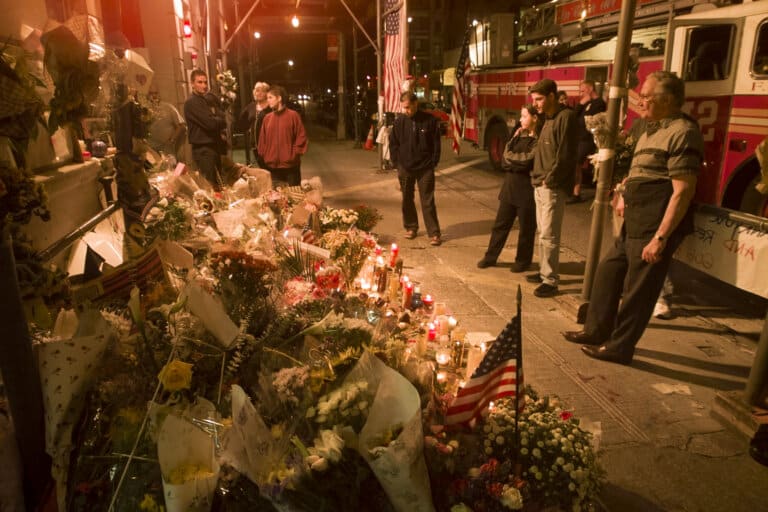
BP Editor’s note: A collection of photos taken by BP photographers Jim Veneman and Morris Abernathy in the days after 9/11 follows this story.
NASHVILLE (BP) – Career photographer and longtime Baptist Press photo editor Jim Veneman was on the communications team at Union University in the fall of 2001. When the planes hit the Twin Towers the morning of Sept. 11, Veneman remembers watching the coverage with students and colleagues. He remembers the Union community gathering to pray.
Then he remembers a phone call from then-BP executive editor Will Hall that afternoon.
“How soon can you leave?” Hall asked.
Veneman asked his boss, then-Union President David Dockery, who approved him to go. The next afternoon, a team of three – two photographers and a writer – headed north in the last rental van to be found in Middle Tennessee. Photographer Morris Abernathy, also a longtime BP photo editor, drove.
On the way up, they stopped in Roanoke, Va., to print their newly made and emailed press credentials at an office store. They noticed the lights on at a nearby high school football stadium.
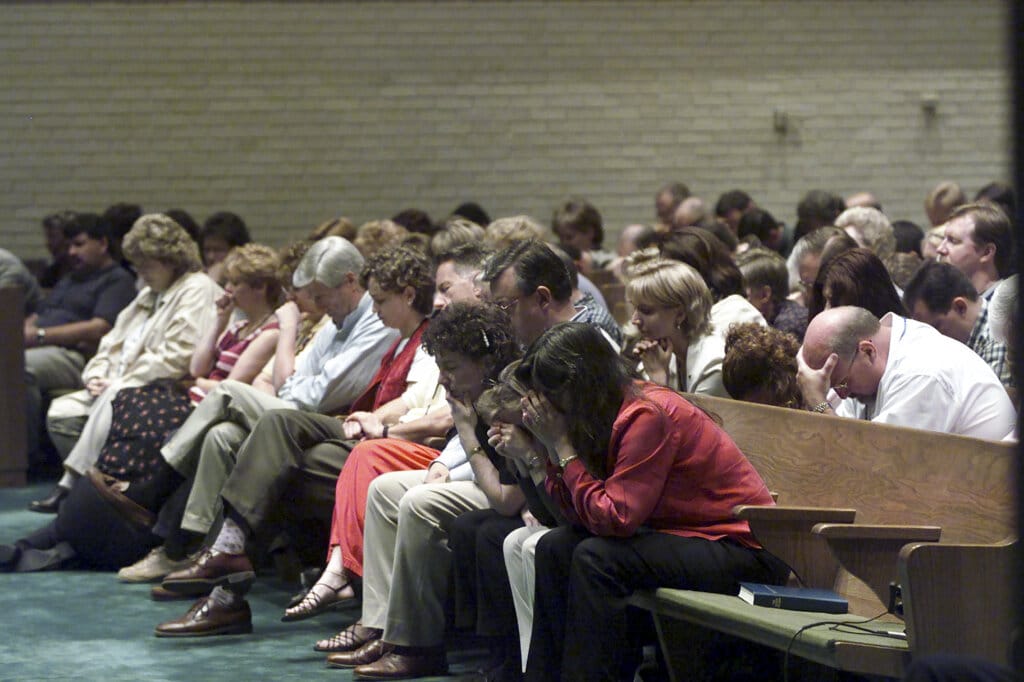
“We pulled off the road and drove in, and they had a community city gathering of people praying,” Abernathy recalled. “And for about 10 minutes, we shot pictures of what was going on in Roanoke, Va.”
Arriving on the scene
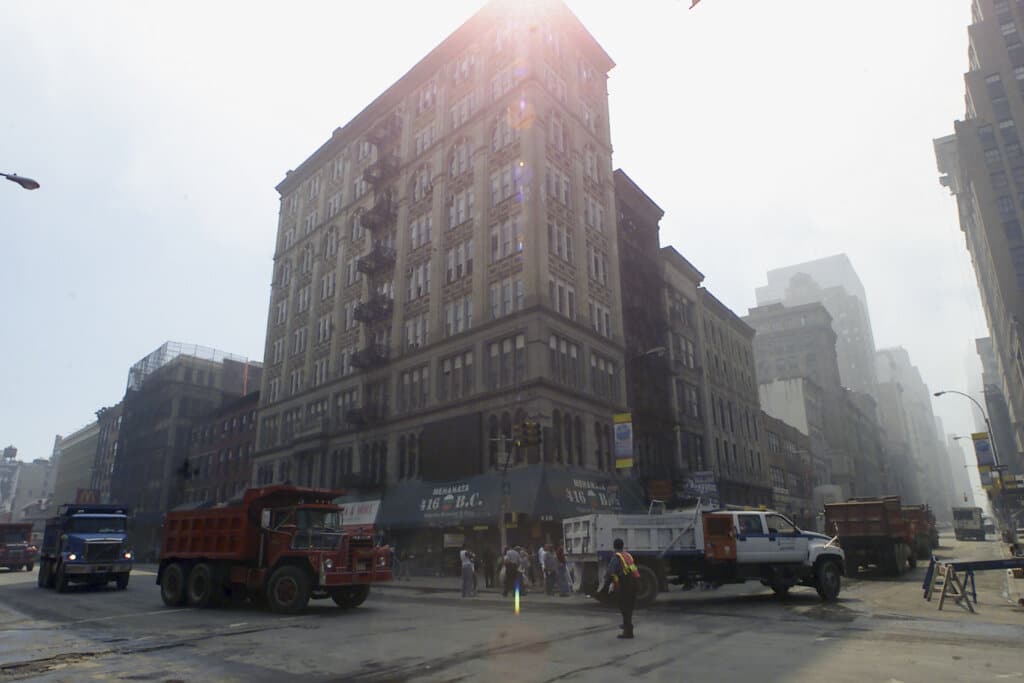
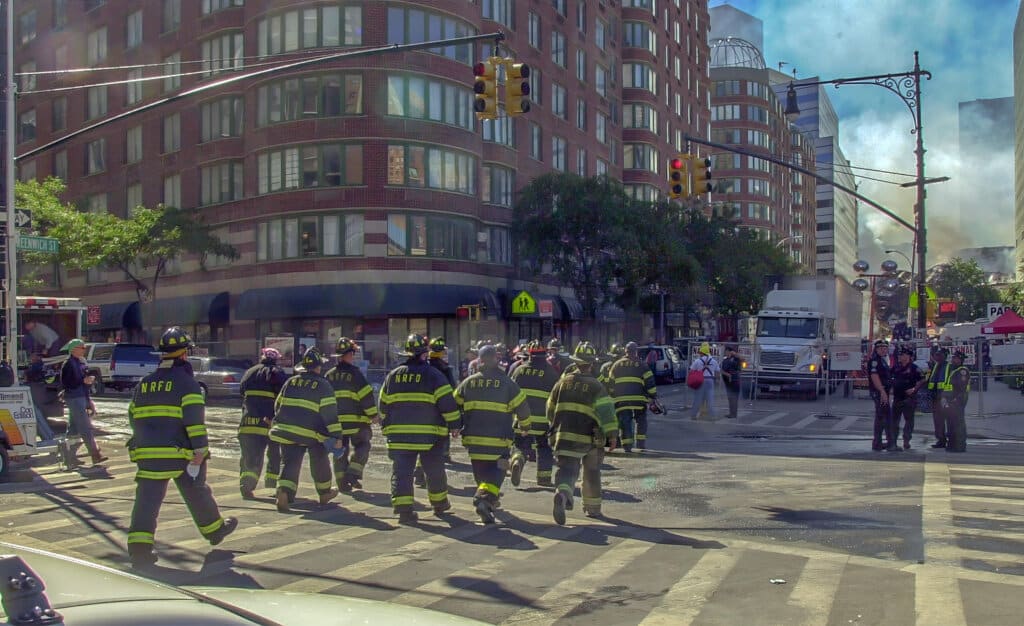
They kept moving and arrived in lower Manhattan the next morning before sunrise.
“The glow at Ground Zero was just smoke,” Abernathy said. “And you could see it. And we all just kind of froze.”
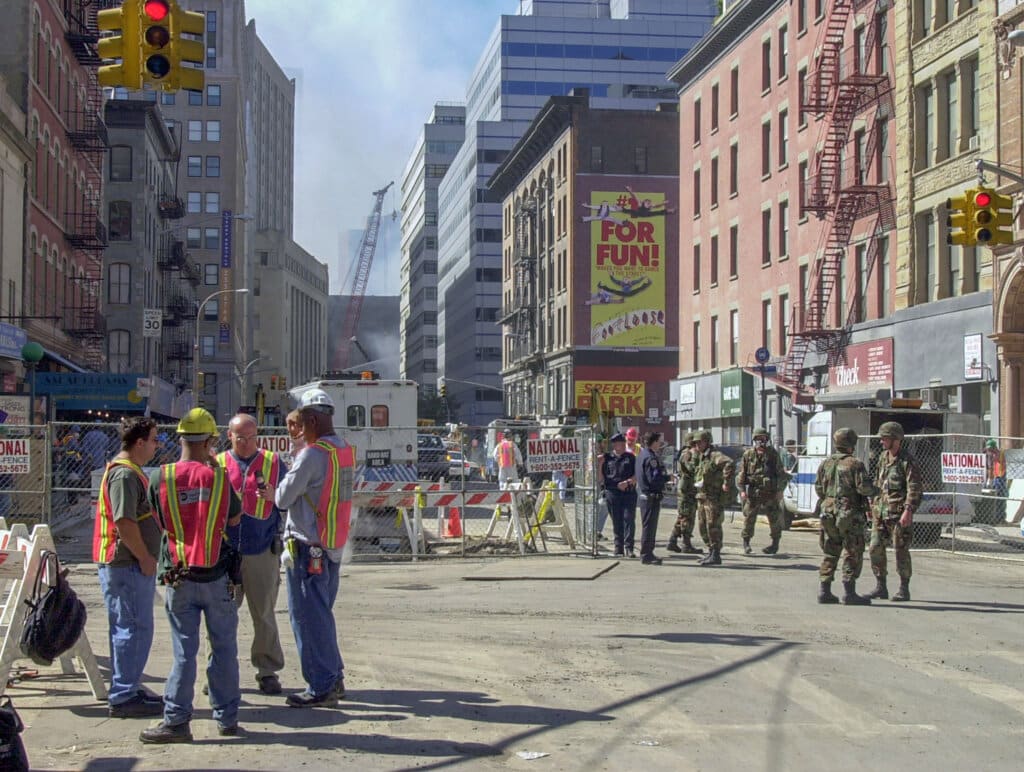
Their press credentials got them past several roadblocks, but eventually, they could drive no farther.

Reta Mabe attends a prayer vigil Wednesday night, Sept. 12, 2001, in Roanoke, Va. Photo by Morris Abernathy
They were trying to meet up with someone Veneman had worked with a few years earlier after a similar disaster.
“When I covered the Oklahoma City bombing, there was a chaplain there. And, during the night at some point, I contacted him and asked him about how we should get into the area because we didn’t know what was going to happen.
“He sent us a disaster relief credential. And he said, ‘This won’t get you all the way in, but it’ll get you to me.’”
They left their van and used the disaster relief credentials to get through to their contact, and eventually, all the way to Ground Zero.
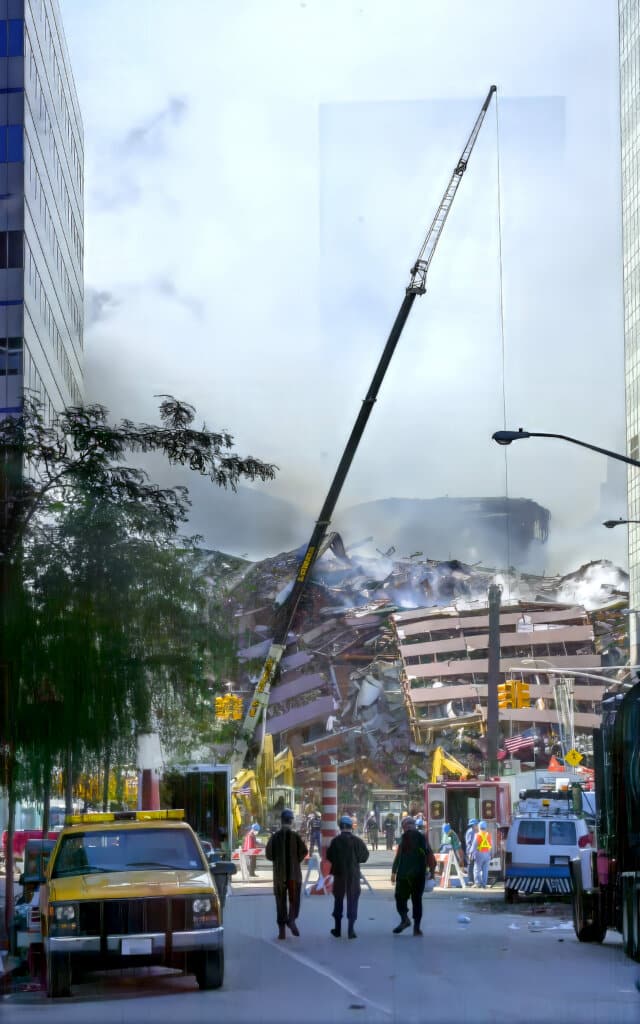
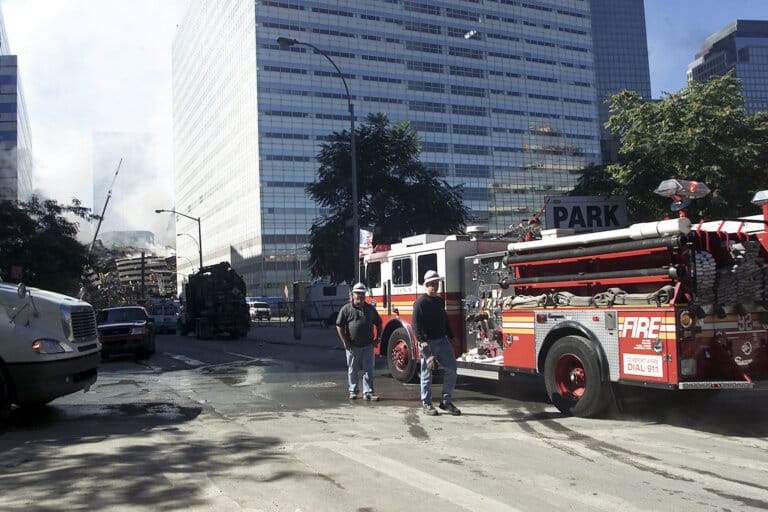
“The thing that hit us as we walked in were the smells of the burning debris,” Abernathy said. “There’s this very kind of a toxic, heavy, heavy smell in the area that you couldn’t escape.”
Hope amid the hopelessness
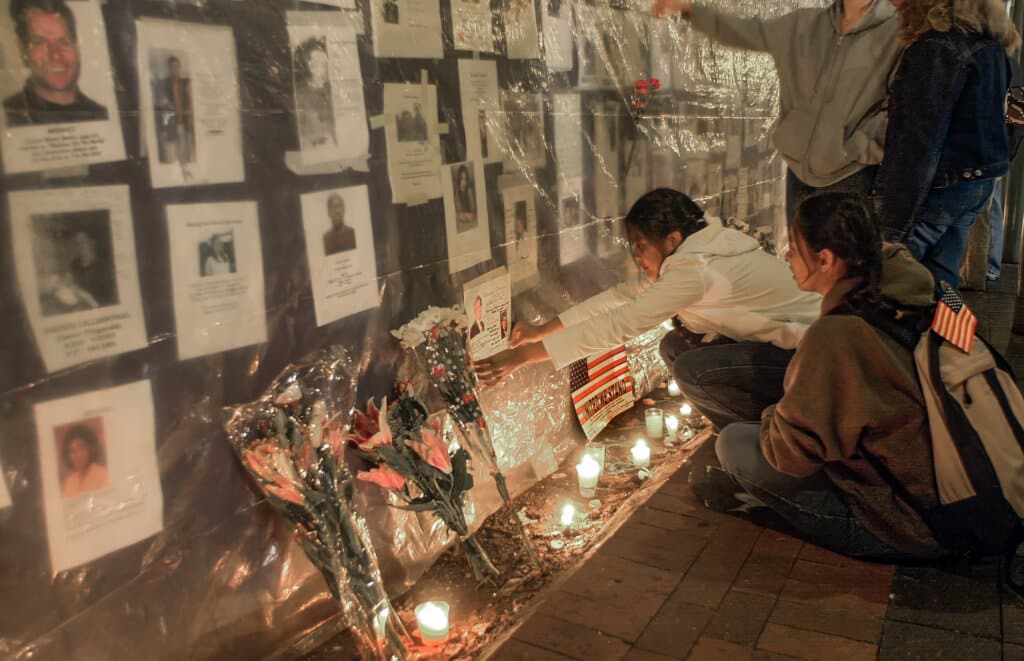
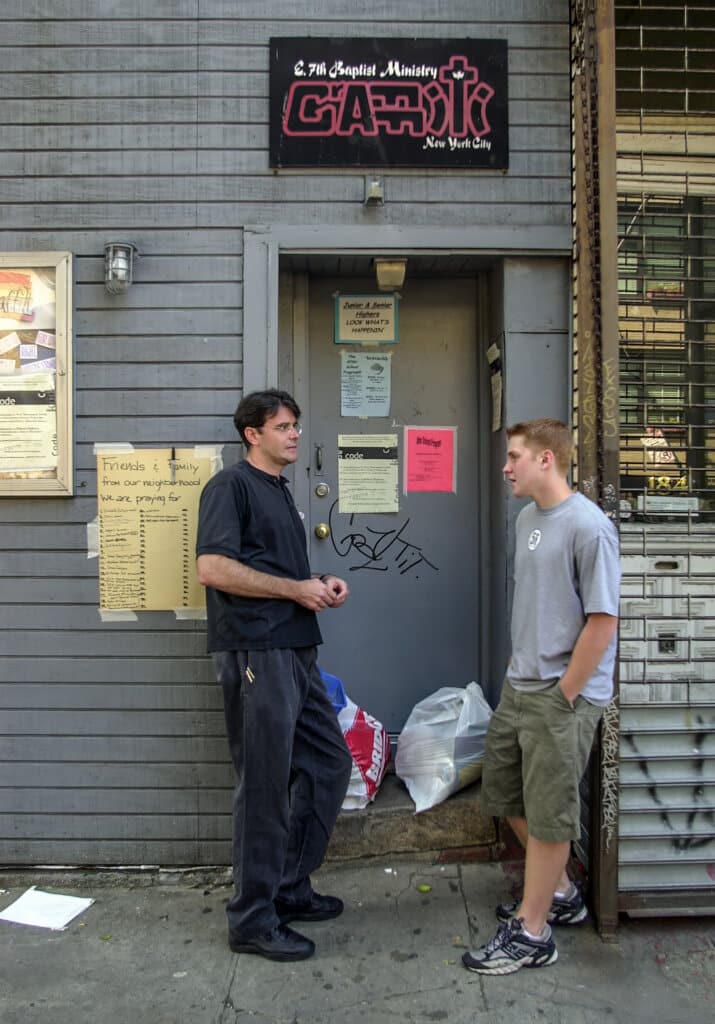
“When you were in the Ground Zero area, there were not family members and people looking, because they weren’t allowed in the area,” Veneman said. “But as soon as you left there, as you got further away from Ground Zero, that’s when you started seeing signs and lists of names and phone numbers – ‘Contact me if you see this person.’

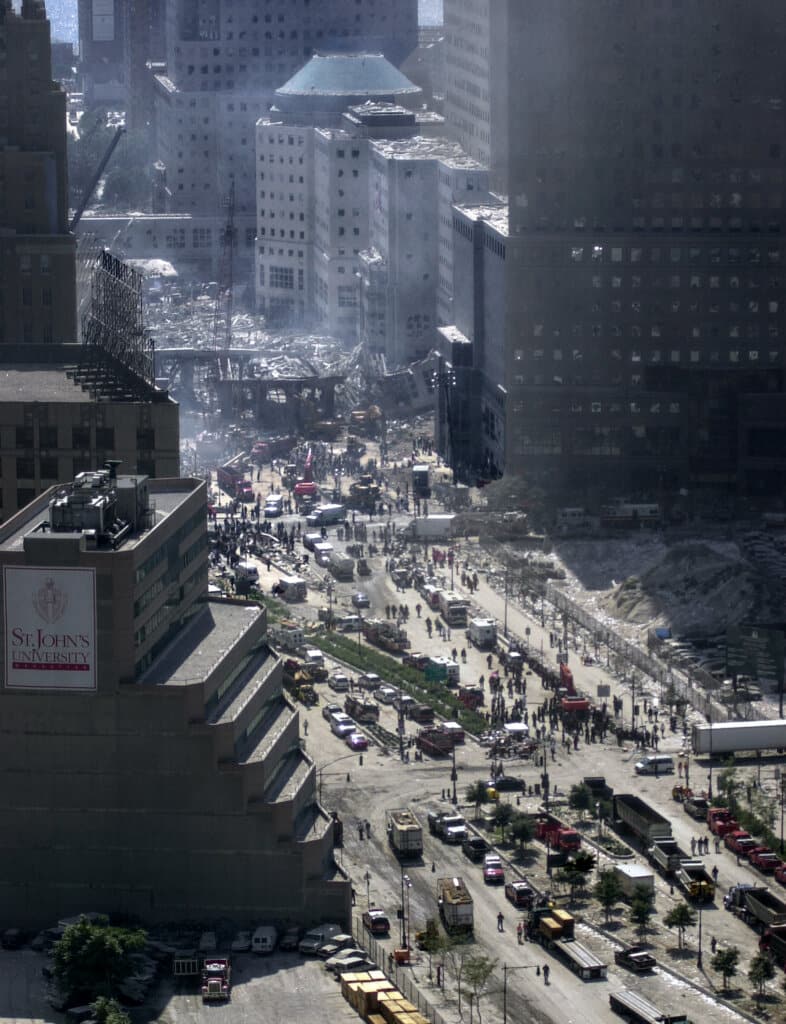
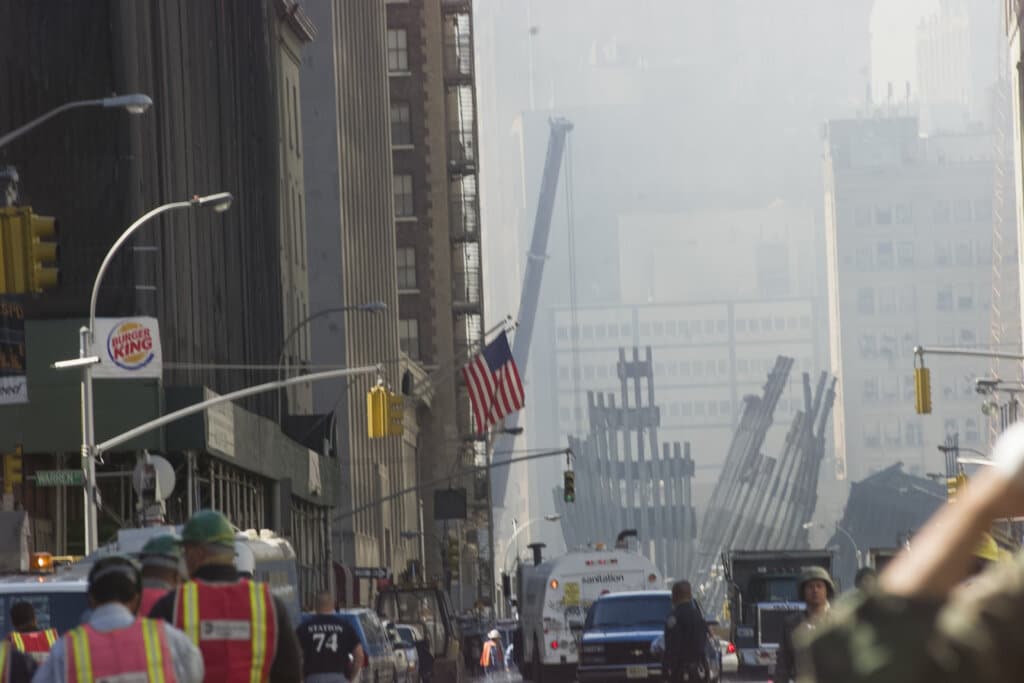
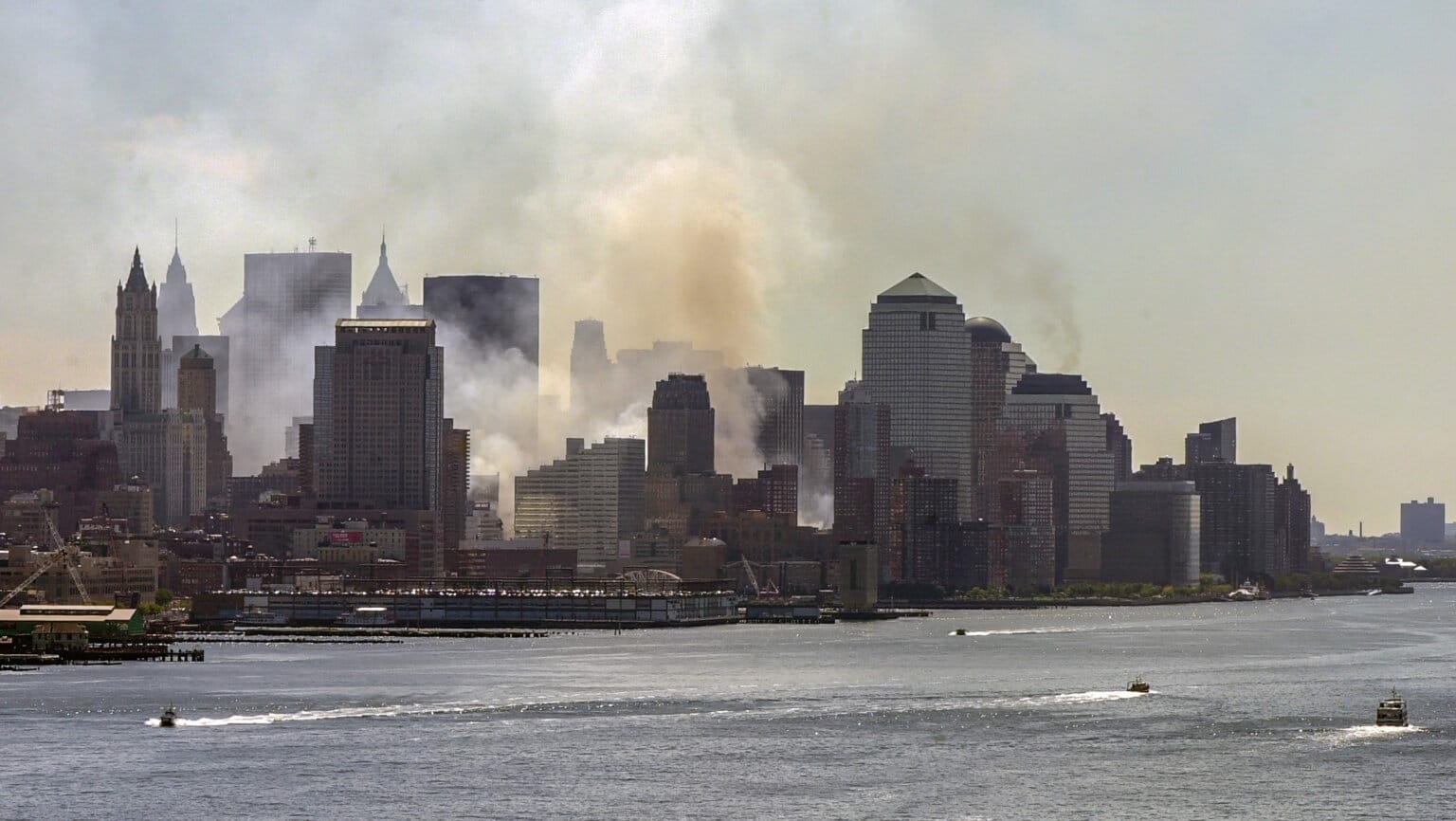
The smoldering ruins of the World Trade Center blanket parts of Manhattan days after the deadly blast. Photo by Jim Veneman
“And having just come over and over again from that Ground Zero area, we were relatively certain that most of those faces that we were being shown and people we were being asked about were not going to turn up.
“It was a tough, tough moment, but they were so hopeful that somebody had seen their loved one.”
One image has come to define the experience for Veneman – a photo he took of Lt. Col. Ellen McArthur, wearing fatigues and holding up an American flag that had been pulled from the rubble.
He knew it was a powerful photo, but he didn’t know how powerful until after he’d emailed it to then-BP editor Art Toalston.
Toalston told Veneman on the phone later that the cross in the picture was a reflection of God’s presence in the midst of tragedy and chaos.

Morris Abernathy photo
“And I’m like, ‘Huh, was there a cross in the background?’” Veneman recalled. When he looked at the photo again, it was obvious – the light from behind the woman is illuminating the red, white and blue of the flag, but her body casts a shadow in the shape of a cross in the middle.
Veneman, who has taught photography classes for decades now uses the photo in his teaching.
“[It’s an] illustration of how sometimes things can be literally right in front of you and you don’t see it,” he said. “It wasn’t until Art said ‘that cross is what did it,’ because it gave Baptist Press an image to send out that literally showed that intersection between one’s faith and one’s patriotism in one frame.”
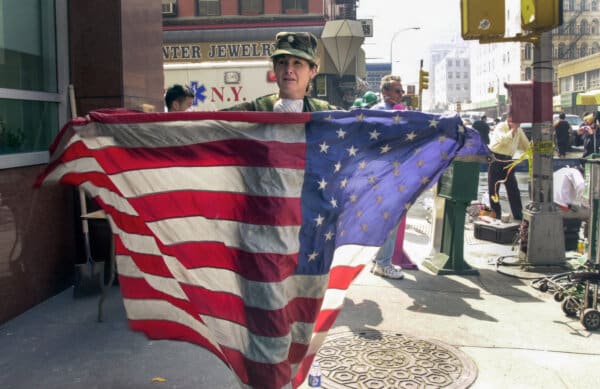
Lt. Col. Ellen McArthur, of Red Bank, N.J., displays an American flag that she pulled from the ruins of the World Trade Center. Photo by Jim Veneman
Both men remember the way activity would stop when human remains were found at Ground Zero. Those remains would be carried out in one of three colors of 5-gallon buckets – red for firemen, blue for policemen, white for civilians.
“Everybody, as the bucket passed them, they would be quiet,” Abernathy recalled. And often, “they weren’t finding human bodies. They were finding pieces of human bodies. … And that hit us very hard.”
Making it work
The team stayed in the city four days, sleeping at night at a housing facility used for mission teams and eating whatever was available.

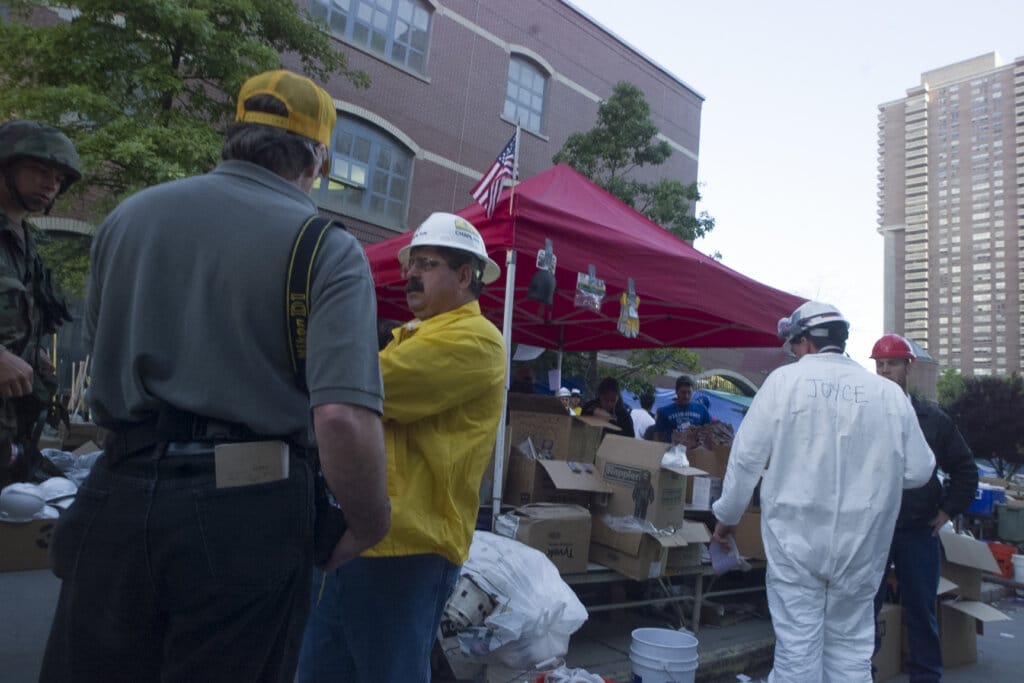
Baptist Press photographer Morris Abernathy (right) talks with Ed Simpson, a volunteer with Tennessee Baptist Disaster Relief, about needs in the area around the World Trade Center. Photo by Jim Veneman
Food “wasn’t a problem,” Abernathy said. Restaurants opened their doors, and strangers were handing out food. “I don’t remember going hungry,” he said.
At night, they would have to spend a long time emailing their images. Both digital photography and internet communications were in their infancy at the time.
“We wouldn’t send 50 images or 100 images,” Abernathy said. “We would send eight. Because at that time, it took so long. … If you sent 10 images, it would take an hour.”
Feelings still fresh
Though memories fade after 25 years, both men will never forget the emotions of those days.
Everyone goes through hard things, Veneman said. “But 9/11 was very different. So many experienced a horrific thing at the very same time.
“Many experienced tremendous personal loss for sure, but loss at some level was felt across our entire country, and 25 years later, we still feel it, almost like it just happened.”
Laura Erlanson is the Baptist Press managing editor.