By Will Hall, Baptist Message executive editor
This is the first installment of a 12-part series about evidence that the Bible is truth.
ALEXANDRIA, La. (LBM) – There are two essential truths that undergird all Christian beliefs: you can place your full faith and trust in Jesus and you can place your full faith and trust in His Word.
Indeed, the Bible declares, “In the beginning was the Word, and the Word was with God, and the Word was God,” (John 1:1). So, the integrity of the Word and that of the Person of Jesus are inseparable. For those of us who believe, the power and truthfulness of the Word is revealed to us through our personal relationship with the Holy Spirit who was there at the beginning of creation (Genesis 1:1-2), but also is here now to dwell in us; testify to us about Jesus; convict us of sin, righteousness, and judgment; and speak truth to us, glorify Jesus and declare Him to us (John 14:16-18; 15:26-27; 16:7-15).
Still, we are called to “always be ready to give a defense to everyone who asks you a reason for the hope that is in you,” (1 Peter 3:15).
Obviously, the best defense we can give to anyone is the testimony of the Word through our transformed lives (exhibiting hope through Christ in us). Yet, there are times we need to point to the evidence of the truth of the Word (which contains that hope) in our natural world as well. Doubters need to be reassured by “His invisible attributes” in creation (Romans 1:20), and critics of Scripture need to be confronted with this evidence, too.
IN THE BEGINNING
Skeptics have long attacked the veracity of the Bible, looking for contradictions and lack of physical evidence to support it, sowing disbelief about the Word even in the account about the creation.
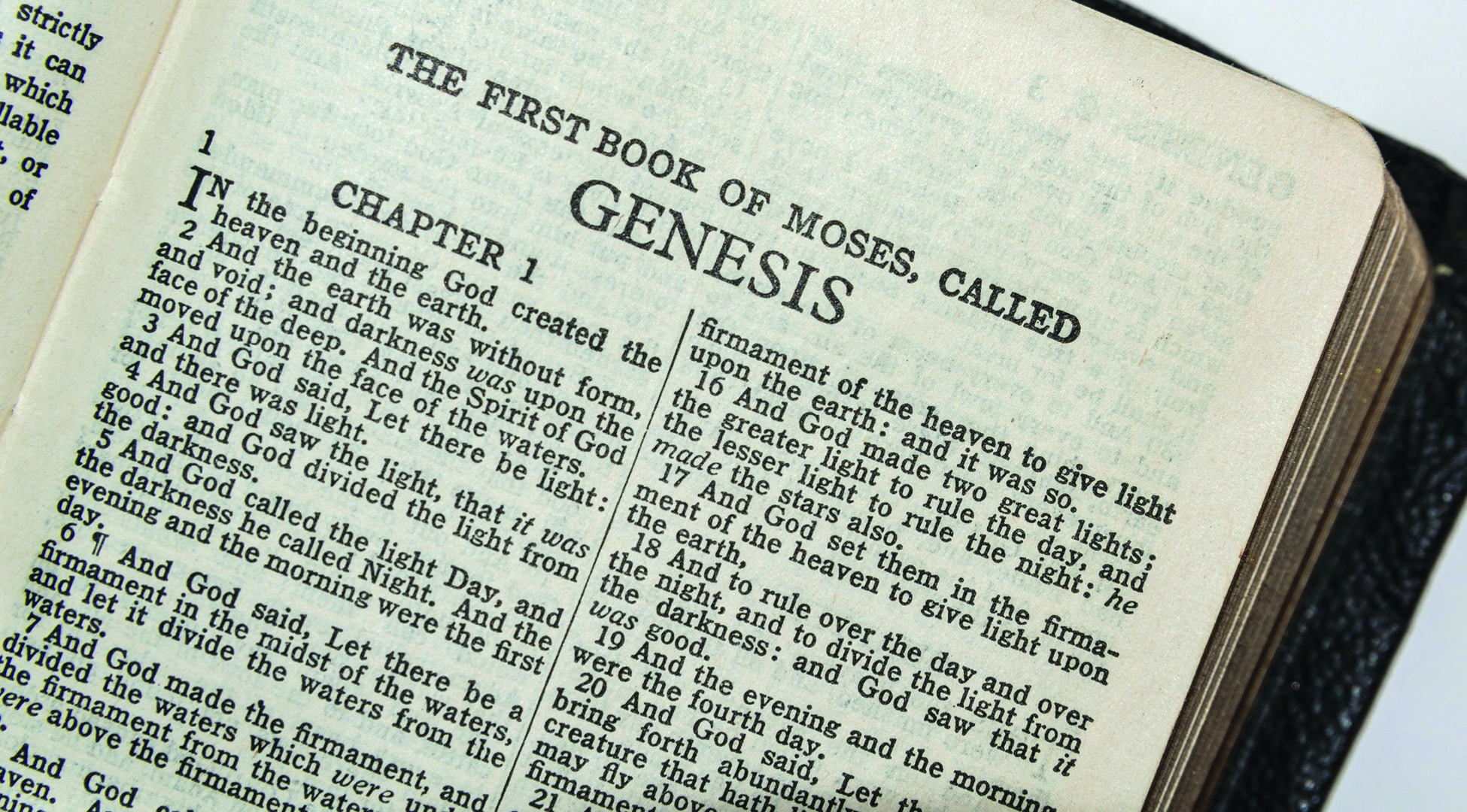
Genesis 1:2 records that “God created the heavens and the earth,” meaning He formed our universe and specifically our planet within it. Then, verse 2 details that the earth was “without form,” or featureless, and that His Spirit was “hovering over the face of the waters” – a clear statement that there were no continents, just water.
Scientists certainly have taken issue with God’s hand in creation, preferring to exult the “Big Bang Theory” as the origin of the universe. However, by logic a “big bang” means that matter must have existed before it would have compacted into a hot and dense pool of particles that exponentially expanded as if an explosion (more about this in a later article).
But for about 75 years, since astronomer Fred Whipple proposed the “dirty snowball” theory about the composition of comets, scientists have rejected the biblical notion of a water world in the beginning, and instead argued that earth’s watery surface resulted from a prodigious pummeling by comets (whose ice melted and pooled on our planet’s surface) — a theory more recently revamped to state that it was ice-laden meteorites (parts of passing asteroids) that collided with earth. An alternate theory suggests that water arrived with a single catastrophic crash from space that also produced the moon as debris.
Until now, or at least since May 2017.
That was when a joint research team from the Iowa State University and the University of Colorado released a report that concluded the whole world was covered in water from the start, thus dispelling the notion that Earth’s oceans resulted from ice released upon impact of meteorites with Earth.
They discovered evidence of heavy oxygen, Oxygen-18, in ancient waters instead of Oxygen-16, which is the most abundant isotope of Oxygen found in seawater today. Because soil readily absorbs Oxygen-18, the team concluded that continents did not exist then.
“Our research indicates there were no mountains and continental collisions” during Earth’s early existence, they said. “It was a much more quiet and dull place.”
Their report added that this condition of a water world “pre-dated the Late Heavy Bombardment … when the Earth was pummeled by comets and asteroids.”
As a child of God, you can believe Genesis 1:1-2 because He spoke it.
But when you read that “the Spirit of God was hovering over the face of the waters,” you can also know that the world of academia at least agrees that in the beginning, the Earth’s watery surface was already in place and not the result of ice from outer space.