By Brian Blackwell, Baptist Message staff writer
HOUMA, La. (LBM) – As Artemis II completed its recent 10-day mission that included traveling to the far side of the moon, retired NASA rocket scientist Clifton Arnold reflected about his part in helping make the journey a success.
“Seeing the takeoff, landing and photos of the Artemis II mission is one of those moments that brings back memories of decades of hard work,” Arnold, pastor with Mechanicville Emmanuel Baptist Church and Kingdom Life Fellowship in Houma, told the Baptist Message. “A lot of people see the end result of preparation for launch or liftoff, but a lot goes into the years of engineering development and testing before you get to that point.
“When you plan it, and it goes as planned, it’s awesome,” he continued. “It’s a great feeling to see all the work you’ve done and all the teams that you’ve led over the years get to that point of launch and landing.”
Before retiring from NASA in 2025, Arnold served as program manager with NASA Headquarters in the Office of Safety and Mission Assurance.
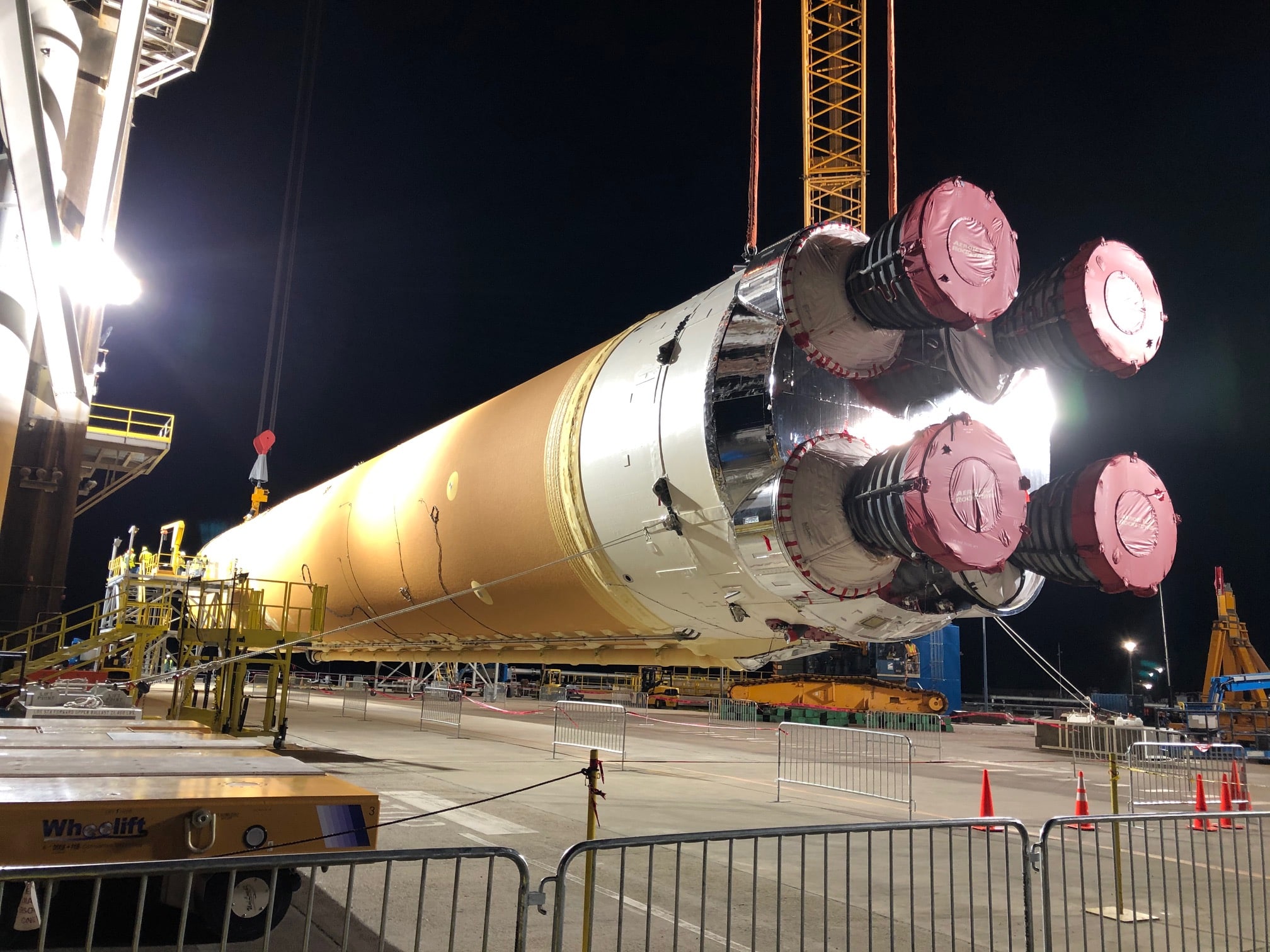
During his time with NASA, his involvement with Artemis II included project manager for rocket propulsion testing and development, where he managed and oversaw elements and components of rocket engine developments and testing of the Space Launch System, Launch Abort System, Core Stage, Orion and Orion heat shield. Test sites included Stennis Space Center in Bay St. Louis, Miss., Marshall Space Flight Center in Huntsville, Ala., White Sands Test Facility in White Sands, New Mexico, Glenn Research Center in Cleveland, Ohio, and Plum Brook Statin in Sandusky, Ohio.
He credits his team of 800 for helping to make Artemis II a success.
“Managing and overseeing the work and ensuring that the integrity of the hardware was maintained was a very fulfilling job,” he said. “I have been truly blessed to have had a career that spans 40 years in defense and aerospace systems and was able to work with a lot of talented folks.”
Looking to the future, Arnold said he is excited about how the next generation will be involved with future NASA missions.
“NASA is encouraging the next generations of future explorers,” Arnold said. “When you look up in the night sky, you may wonder what’s really there, how far away is that star you see and can we really reach out and get into space. And so, I think the earlier you can engage young people, the more they start to take the right and necessary courses in school to prepare them for future tasks with space.”
Arnold said Christ followers should not shy away from scientific endeavors and instead should embrace the opportunities God has allowed them to explore the universe.
“NASA was one of the greatest jobs I had because during the week I was exploring and explaining God’s creation,” he said. “And then on Sunday, I get to teach on who created those things and our relationship with God and with Christ.
“As Southern Baptist churches and schools, it’s imperative that we maintain that we can be both,” he continued. “We can be scientists and we can be faithful believers, and there is no contradiction in either one of those because Genesis tells us what was created and how He created it.”
Artemis II launched from Florida on April 1 and returned to San Diego, Calif., on April 10. During the mission, the four astronauts set the record for the farthest distance humans have traveled from earth, reaching 252,756 miles from our planet. They also documented scenes of the lunar far side that had not been seen before by the naked eye.